
Obfuscation is the practice of deliberately making something unclear or difficult to understand. In cybersecurity, it involves making code or data hard to interpret by attackers, even if they manage to access it. The purpose of obfuscation is to protect sensitive information and prevent malicious actors from exploiting it.
Obfuscation Engines
The problem with Chekhov’s Gun

Logical Security Explained
Stay protected if your data is “compromised.”
Chekhov’s Gun is a storytelling principle named after the Russian playwright Anton Chekhov. It suggests that every element introduced in a story should have a purpose. If a gun is shown hanging on the wall in the first act, it must be fired in a later act. Otherwise, it shouldn’t be included at all. This principle emphasizes the importance of relevance and efficiency in storytelling.
In the context of cybersecurity, we can think of “Chekhov’s Gun” as a logic problem: any element introduced into a system should be there for a reason. If it’s not necessary, it shouldn’t be included because it can pose a security risk. This brings us to the concept of obfuscation in digital security.
How it works:
Keep separate, stay secure
Introducing “Chekhov’s Secret Files”
The Hidden Safe Scenario
In the realm of security and encryption, an adversary can infer one’s intentions and potential actions based on observed behaviors, which can sometimes be more telling than any physical evidence. This concept highlights the importance of understanding how intent can influence security measures.
The problem with Intent
Imagine an embezzler who anticipates a police search. To protect incriminating files, they purchase an advanced hidden safe and store all sensitive documents inside it. When the police conduct their search, they find nothing incriminating. At first glance, the hidden safe appears to have successfully done its job.
However, the police discover a receipt for the purchase of the hidden safe. This seemingly minor detail can significantly increase the embezzler’s risk for several reasons.
Assumptions About Intent
The police may infer that the embezzler purchased the hidden safe to conceal something important. After all, why would someone go to the trouble and expense of buying an advanced hidden safe if they had nothing to hide? This assumption can lead to further scrutiny and investigation.
Assumptions About Content
The existence of the hidden safe implies that it contains valuable or incriminating items. The police might reason that no one would invest in a hidden safe without a compelling reason to protect something valuable. This logical deduction can prompt more rigorous efforts to locate and access the safe.
Built on the most secure platorm
Understanding the Role of Intent in Security
The hidden safe scenario illustrates how intent can play a crucial role in security. Even with robust encryption and security measures, the actions taken to implement these measures can reveal significant information to adversaries. Here are some key points to consider:
Behavioral Indicators
The Arpir Secure Laptop is equipped with an innovative killswitch feature, designed to enhance security when physical control over the device is compromised. Users can configure a specific file within the operating system that, when accessed, activates the killswitch. This triggers an immediate wipe of the secure drive, effectively removing sensitive information to prevent unauthorized access. This functionality is not only crucial for situations where the laptop is lost or stolen, but it also allows for a discreet method to erase data simply by opening the designated file.
Contextual Clues
The context in which security measures are implemented can also provide clues about intent. For example, sudden changes in behavior, such as installing new security systems or altering communication patterns, can indicate that something important is being protected.
Balancing Security and Opacity
Effective security involves not only protecting sensitive information but also managing the visibility of the protective measures themselves. The goal is to minimize any indicators that might reveal the presence or importance of the protected assets.
Built on the most secure platorm
Mitigating Risks Related to Intent
To address the risks associated with perceived intent, we employ the following strategies:
Disguise Security Measures
Where possible, integrate security measures in a way that doesn’t attract attention. For example, use common or innocuous-looking equipment to conceal more advanced security tools.
Diversify Security Practices
Employ a range of security measures that vary in visibility and complexity. This can help create ambiguity and reduce the likelihood that adversaries will accurately infer the presence of valuable assets.
Maintain Operational Security (OpSec)
Be mindful of the information that can be gleaned from behaviors and communications. Practicing good OpSec can help minimize the risks associated with unintended disclosures of intent.
Arpir Secure Laptop
How Obfuscation Enhances Security
The Arpir Secure Laptop includes a sophisticated killswitch feature that allows users to designate a specific file as a trigger. If this file is accessed, it activates the killswitch, instantly wiping the secure drive to prevent unauthorized data access. This feature is essential for protecting sensitive information if the laptop is lost or stolen, and also offers a discreet way to erase data by simply opening the file.
Code Obfuscation: This technique involves modifying the code to make it difficult for unauthorized users to read and understand. For example, variable names might be changed to meaningless strings, and code logic might be convoluted to confuse attackers.
Data Obfuscation: Sensitive data, such as personal information or financial records, can be transformed into a format that’s hard to decipher. Encryption is a common method of data obfuscation.
Network Obfuscation: This involves disguising network traffic to prevent attackers from identifying and exploiting vulnerabilities. Techniques like VPNs and proxy servers can help mask the true nature of network communications.
Arpir Secure Laptop
The Problem with Assumptions
Assumptions can lead to coercion, implications of guilt, and severe consequences, including punishment or even execution. When authorities have a specific piece of information, such as the location of a hidden safe, they can direct their questioning effectively. They might not be able to force a person to answer, but they know precisely what to ask.
The Risk of Coercion and Implications of Guilt
If someone refuses to disclose the location of a hidden safe, this refusal can be seen as an implication of guilt. Most people, despite concerns about privacy, might cooperate to avoid the potential consequences of non-compliance. Authorities or adversaries may interpret a refusal to comply as an admission of wrongdoing, leading to further scrutiny and potential penalties.
A Digital Example: The Use of TOR
The problem of assumptions is evident in the digital realm as well. Consider the use of TOR (The Onion Router), a tool designed for secure and anonymous communication online. While TOR is an essential tool for privacy, its use can be perceived negatively in many parts of the world. Some governments assume that anyone using TOR must be involved in illegal activities, such as drug dealing. This assumption can lead to severe repercussions, including execution, based solely on the use of a privacy tool.
Balancing Security and Opacity
Just as there are storytelling techniques to address the issue of Chekhov’s Gun, such as using Red Herrings to mislead and create suspense, similar strategies can be applied to digital security and the handling of sensitive information.
Built on the most secure platorm
Understanding the Role of Intent in Security
Assumptions can lead to serious consequences in both physical and digital security contexts. By understanding the risks associated with these assumptions and employing strategies like Red Herrings, individuals and organizations can better protect their assets and maintain privacy. Just as in storytelling, where misleading elements can add layers of complexity and protection, similar tactics can enhance security and reduce the risks of erroneous assumptions and their potential fallout.
Red Herrings in digital security can help mislead adversaries and protect critical information. Here are some ways to apply this concept:
Decoy Data and Systems
Create false targets, such as decoy files or systems, to divert attention from the actual valuable data. This can confuse attackers and make it harder for them to find what they’re looking for.
Diversified Security Measures
Implement a range of security practices that vary in visibility and complexity. This creates ambiguity and makes it difficult for adversaries to determine the true nature of your security setup.
Behavioral Camouflage
Effective security involves not only protecting sensitive information but also managing the visibility of the protective measures themselves. The goal is to minimize any indicators that might reveal the presence or importance of the protected assets.
Built on the most secure platorm
XXXX Mitigating Risks Related to Intent
To address the risks associated with perceived intent, we employ the following strategies:
Arpir Secure Laptop
Solving the “Chekhov’s Hidden Container” Problem
Continuing from the earlier scenario, let’s explore how to use Red Herrings, enhanced by machine learning, to address the issue of hidden compartments and misleading intent. This involves designing an environment centered around hidden compartments.
By creating an environment filled with Red Herrings and leveraging machine learning, it is possible to effectively solve the “Chekhov’s Hidden Container” problem. The proliferation of hidden compartments and the use of dynamic, realistic decoys make it impossible for adversaries to draw accurate inferences about any specific activity. While this approach significantly complicates any search efforts, maintaining strict OpSec and continuously updating decoys are essential to ensure ongoing security.
To solve the problem of intent, we can introduce multiple layers of misdirection and obfuscation. Here’s how this can be achieved:
Creating an Environment Full of Red Herrings
Use machine learning to create multiple fake data sets and misleading clues. These decoys are designed to divert attention and make it difficult for anyone to determine which activities are genuine and which are not. Machine learning can automate the creation and distribution of these decoys, ensuring they are realistic and constantly updated.
Fake Data Sets and Clues
Use machine learning to create multiple fake data sets and misleading clues. These decoys are designed to divert attention and make it difficult for anyone to determine which activities are genuine and which are not. Machine learning can automate the creation and distribution of these decoys, ensuring they are realistic and constantly updated.
Layered Obfuscation
Just as there are storytelling techniques to address the issue of Chekhov’s Gun, such as using Red Herrings to mislead and create suspense, similar strategies can be applied to digital security and the handling of sensitive information.
Built on the most secure platorm
The Role of Machine Learning
Machine learning can play a crucial role in creating effective Red Herrings:
Dynamic Decoy Generation
Machine learning algorithms can generate decoy data sets and clues that mimic real data, making it difficult to distinguish between genuine and fake information.
Behavioral Analysis
By analyzing patterns in behavior and search techniques, machine learning can adapt the placement and nature of Red Herrings to stay ahead of potential discovery methods.
Continuous Update
Machine learning can ensure that Red Herrings are continuously updated, reflecting new patterns and trends to maintain their effectiveness.
Built on the most secure platorm
XXXX Mitigating Risks Related to Intent
Even with these precautions, there is still a vulnerability to brute force searches. Here’s how to make discovery more challenging:
Increase Complexity
The more complex and layered the hidden compartments and Red Herrings, the harder it becomes for adversaries to find everything. This includes using diverse types of hidden compartments and varying the methods of obfuscation.
Limit Information Leakage
Ensure that no information about the presence of hidden compartments is inadvertently revealed. This means avoiding behaviors or purchases that might hint at the existence of such compartments.
Operational Security (OpSec)
Maintain strict OpSec protocols to prevent any clues about the hidden compartments from being disclosed. This includes careful management of communication and interactions that could provide hints.
Arpir Secure Laptop
Applying Machine Learning to Enhance Security
To mitigate the risk of discovery and enhance our obfuscation strategies, we can leverage Artificial Intelligence (AI) and Machine Learning (ML) to generate misleading financial documents and create confusion about genuine and fake data. Here’s how we can implement these techniques effectively.
Generating Fake Financial Documents
AI and ML can be employed to create fake financial documents that are unique to specific scenarios or implicate different individuals for the same crime. This makes it challenging for authorities to identify which documents are genuine without external references. Here’s how this can work:
Unique Document Creation: ML algorithms can generate unique financial documents for each simulated crime, ensuring that no two sets of fake documents are identical. This uniqueness prevents easy pattern recognition and adds a layer of complexity to the investigation.
Cross-Implication: By creating documents that implicate different individuals for the same crime, ML can create a web of misleading information, making it difficult for investigators to pinpoint the actual perpetrator.
Using Position to Enhance Obfuscation
As a military commander, General Stickyfingers can further muddy the waters by implementing the following strategies:
Standardizing Hidden Compartments: Mandate that all furniture in military buildings includes hidden compartments. Encourage occupants to use these hiding places without specifying which ones are relevant or valuable. This standardization creates an environment where hidden compartments are the norm, making it impossible to draw conclusions based on their presence alone.
Encouraging Usage Without Context: By promoting the use of hidden compartments without providing context about their importance, the occupants are likely to use them for various purposes, further diluting the significance of any one hiding place.
Implementing These Strategies
By combining AI-generated fake documents and strategic use of hidden compartments, General Stickyfingers can create a robust defense against searches and interrogations. Here are the key steps:
Deploy Machine Learning Models: Develop and deploy ML models that can generate realistic, fake financial documents tailored to specific scenarios.
Standardize Hidden Compartments: Equip all furniture in the command buildings with hidden compartments and encourage their use.
Vary the Context: Ensure that the use of hidden compartments varies widely among occupants, with no clear pattern or relevance to any specific compartment.
Deciding on Environment Uniformity
The final consideration is whether to make each individual’s environment identical or unique:
Identical Environments: Creating identical environments for everyone eliminates the ability to draw any conclusions from the existence of hidden compartments. If every environment is the same, investigators cannot infer anything based on the presence of hidden compartments.
Unique Environments: Making each environment unique increases the complexity of any investigation. Investigators would face a diverse set of circumstances, making it much more difficult to draw comparisons and conclusions.
Logical Security
The Nostradamus Engine
Obfuscation and Encryption Engine
The obfuscation engine on the Arpir Secure Laptop serves as a sophisticated security measure designed to protect user data by generating and interspersing fake data among genuine information. This system effectively confuses and misleads potential intruders by making it extremely challenging to discern real data from decoys.
The goal of this engine is to “poison the well,” rendering all information on the laptop unreliable and unusable to anyone who unlawfully gains access to the device. This advanced approach not only secures data against unauthorized extraction but also adds an extra layer of privacy protection by obscuring the user’s actual activities and data.
Data Segmentation:
Anonymity and privacy assured
Arpir Secure Laptop
Advanced Protection with Killswitch Functionality
The Arpir Secure Laptop includes a sophisticated killswitch feature that allows users to designate a specific file as a trigger. If this file is accessed, it activates the killswitch, instantly wiping the secure drive to prevent unauthorized data access. This feature is essential for protecting sensitive information if the laptop is lost or stolen, and also offers a discreet way to erase data by simply opening the file.
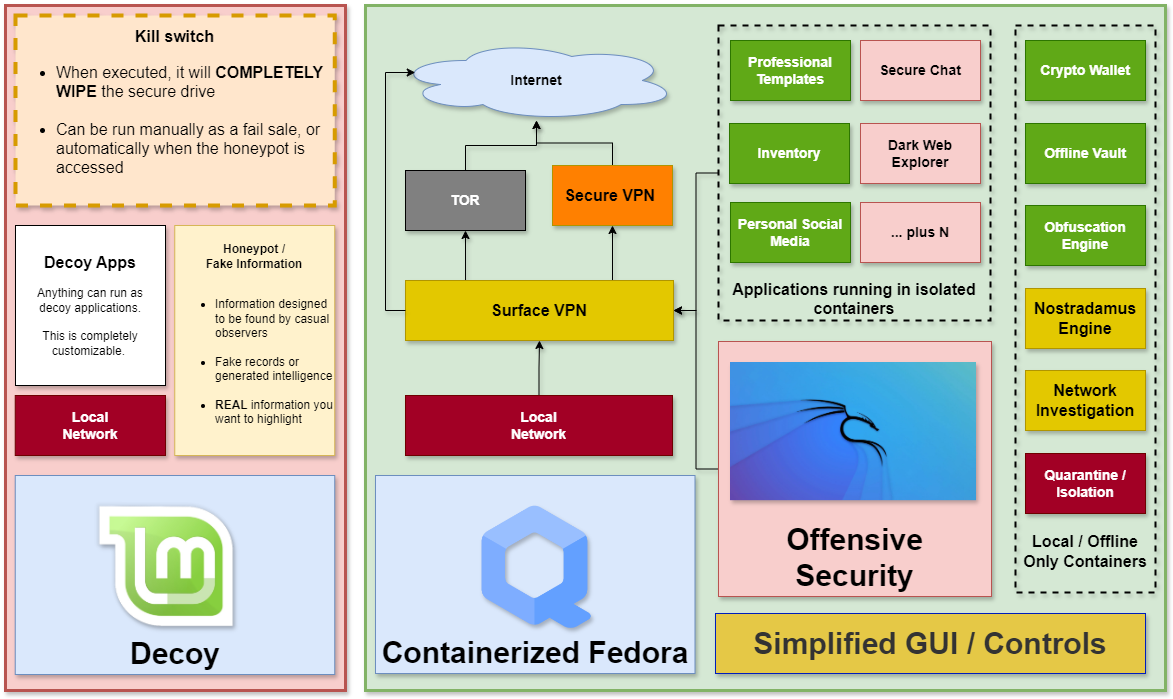
The Arpir Secure Laptop’s killswitch feature offers robust protection by enabling the immediate and discreet wiping of the secure drive when a designated trigger file is accessed, safeguarding sensitive information in the event of loss or unauthorized access.

Introducing Arpir
Decoy OS and Killswitch
The Arpir Secure Laptop features a cleverly designed dual-operating system to maximize security and privacy. At the forefront is a top-level decoy operating system powered by Linux Mint, which functions as a typical OS for everyday tasks like web browsing. This system is designed to deflect any casual investigation, presenting itself as a normal laptop with no indication of the sophisticated secure environment operating beneath. Users are encouraged to utilize this decoy system for routine activities, ensuring that the secure layers remain discreet and undetected.
The Arpir Secure Laptop is equipped with an innovative killswitch feature, designed to enhance security when physical control over the device is compromised. Users can configure a specific file within the operating system that, when accessed, activates the killswitch. This triggers an immediate wipe of the secure drive, effectively removing sensitive information to prevent unauthorized access. This functionality is not only crucial for situations where the laptop is lost or stolen, but it also allows for a discreet method to erase data simply by opening the designated file.
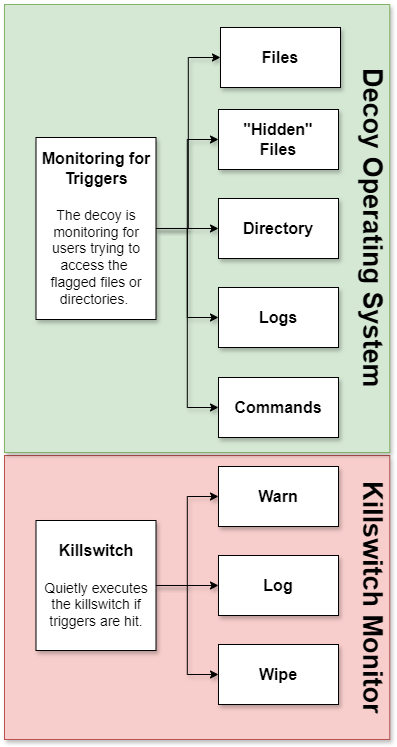
Additionally, the system supports stacking network layers, allowing you to build secure connections atop one another. This layered approach is designed with a fail-close mechanism, ensuring that in the event of a disruption, accidental exposure is prevented by automatically severing the connections.
Built on the most secure platorm
Powered by Qubes OS

The Arpir Secure Laptop’s operating system is powered by Qubes, famously utilized by Edward Snowden for its robust security features. It enhances data protection through the use of secure containers that operate independently, unable to see or interact with each other, thereby preventing mutual compromise.
Reasonably Secure
Qubes OS, which powers the Arpir Secure Laptop, is widely regarded as a “reasonably secure” operating system due to its unique approach to security by isolation. It prides itself on this classification because it acknowledges the practical limits of security in today’s complex computing environments, while striving to provide the best possible protection against threats.
By compartmentalizing applications, data, and processes into separate virtual machines, Qubes ensures that the compromise of one area does not jeopardize the integrity of others, thus maintaining a high level of security that adapts to the needs and threats faced by modern users.

Docker Integration
The Arpir Secure Laptop fully integrates Docker, enabling the effortless running of powerful software applications without the need for manual configuration.

Linux Mint for top layer OS
The Arpir Secure Laptop utilizes Linux Mint as its top-level operating system, chosen for its powerful capabilities and user-friendly interface that many are already familiar with.

Offensive Security with Kali Linux
The Arpir Secure Laptop integrates with Kali Linux to provide users with a comprehensive suite of powerful offensive security tools, all curated and maintained within a reliable package for advanced penetration testing and security assessments.